How to Become a Painter and Decorator in the UK: The NVQ Route — and the Fastest Path to £250 Day Rates
Painting and decorating is the trade people underestimate until they try to cut a ceiling line — and the trade with construction's gentlest entry: modest tool costs, no licensing wall, and a market where the self-employed jump comes faster than any other craft. What separates the £150 day rate from the £350 one is visible in every finished wall. Here's the honest 2026 route.
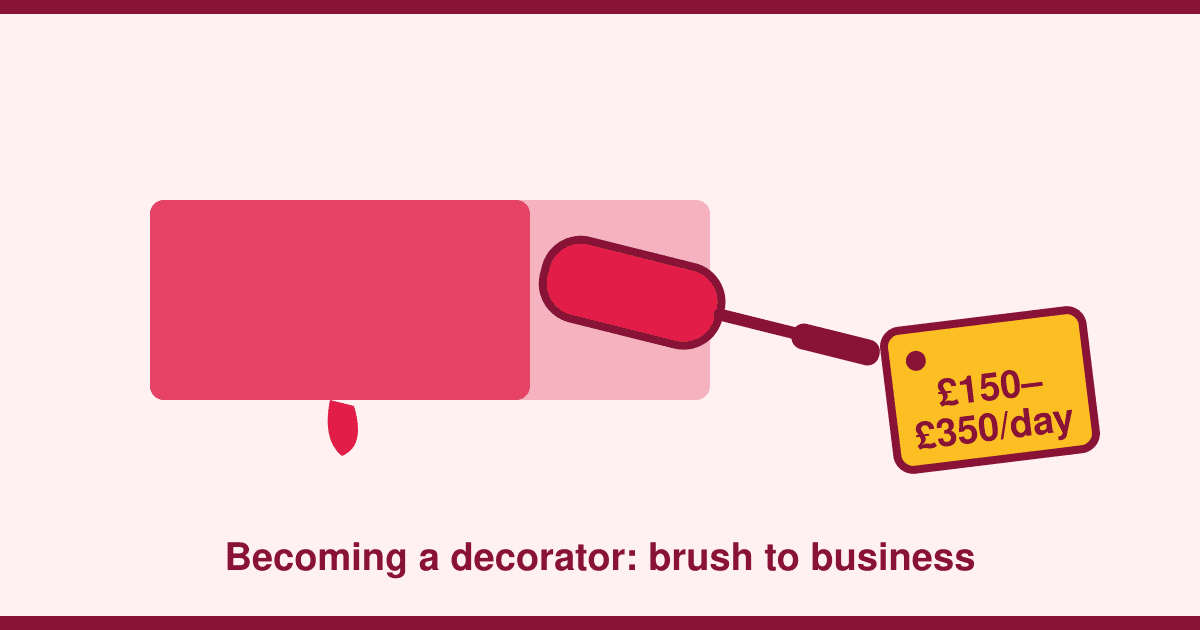
In short: Entry runs through an apprenticeship (~£13,900 a year, £80–£120/day) or work experience plus the NVQ Level 2 in Painting and Decorating — a work-based assessment that certifies what you can already do. Employed decorators earn £26,000–£38,000; self-employed day rates run £150–£200 qualified, £200–£300 with 5+ years, and £250–£350 in London.
The way in
- Apprenticeship: GCSEs in English and maths help but aren't universally required — employers weight work experience and evident care far heavier. Apprentices average ~£13,900 while training, learning surface prep, application systems and the site discipline that separates trades from hobbies.
- The experience-plus-NVQ route: the Level 2 NVQ is work-based assessment — an assessor certifies competence on real jobs, which makes it the natural route for labourers, DIY-experienced career changers and anyone already brushing for a living without paper. With the CITB test it unlocks the CSCS card for site work.
- The improver years: between qualification and premium rates sits the stage the trade calls "improver" — faster, cleaner, fewer redos. This is where day-rate maths is decided.
The pay ladder
| Stage | 2026 earnings |
|---|---|
| Apprentice | ~£13,900/yr (£80 – £120/day) |
| Employed qualified | £26,000 – £38,000 (commercial and supervisory at the top) |
| Self-employed, qualified | £150 – £200/day outside London |
| Experienced (5+ years) | £200 – £300/day |
| London | £250 – £350/day |
The self-employed jump comes early in this trade because the capital barrier is low — brushes, dust sheets, a van — and demand is everywhere. What the jump actually requires is the business layer: quoting properly (your future quotes are literally this checklist), pricing rooms versus day rates, and the pipeline discipline of never finishing a job without the next one booked.
What separates £150 from £350
- Preparation obsession: the finish is decided before the first coat — filling, caulking, sanding sequence. Premium decorators spend more time prepping than painting, and their walls show it for years. (Plaster knowledge included — painting wet plaster is the classic cowboy tell.)
- The premium niches: wallpapering — genuinely scarce as a skill and priced accordingly — plus spray finishing (kitchens, new-build volume) and heritage/period work.
- Reliability as product: in a trade with low entry barriers, turning up when booked, sheeting properly and leaving clean rooms is — measurably — the differentiation. Every review mentions it; premium clients pay for it.
- The customer's checklist is your mirror: everything in how to hire a good decorator — insurance, references, written quotes — is the standard you'll be measured against from day one of self-employment.
Tools honesty: the entry kit is cheap by trade standards, but the professional kit isn't trivial — quality brushes and rollers that don't shed, dustless sanding, spray gear if you chase that niche. Buy as the work demands rather than upfront; in this trade the skills compound faster than the toolbox.
The bottom line
Apprentice or NVQ-certify your experience, grind the improver years on prep discipline, then take the early self-employed jump this trade uniquely offers — £150–£200 rising with speed and finish quality toward £250–£350. It's the most meritocratic ladder in construction: the wall shows exactly what you're worth. For homeowners on the hiring side: find vetted decorators near you here.
Frequently asked questions
Via an apprenticeship (around £13,900 a year while training — GCSEs help but are not universally required) or through work experience certified by the NVQ Level 2 in Painting and Decorating, a work-based assessment. The NVQ plus CITB test also unlocks the CSCS card for site work.
Employed decorators earn £26,000–£38,000 in 2026, with commercial and supervisory roles at the top. Self-employed day rates run £150–£200 for qualified decorators outside London, £200–£300 with five-plus years’ experience, and £250–£350 in London.
Yes — the NVQ Level 2 is a work-based assessment: an assessor certifies competence on real jobs, making it the standard route for experienced but unqualified decorators and career changers who have built skills informally.
Preparation discipline above all — premium finishes are decided in the filling, caulking and sanding. Beyond that: wallpapering (genuinely scarce and priced accordingly), spray finishing, heritage work — and the reliability basics of turning up, sheeting up and leaving clean rooms, which reviews reward directly.